Bose QuietComfort Ultra (2nd Gen) vs. Sony WH-1000XM6
We compare the real-world tradeoffs in comfort, sound customization, and battery life between these two active noise cancelling headphones.
On this page
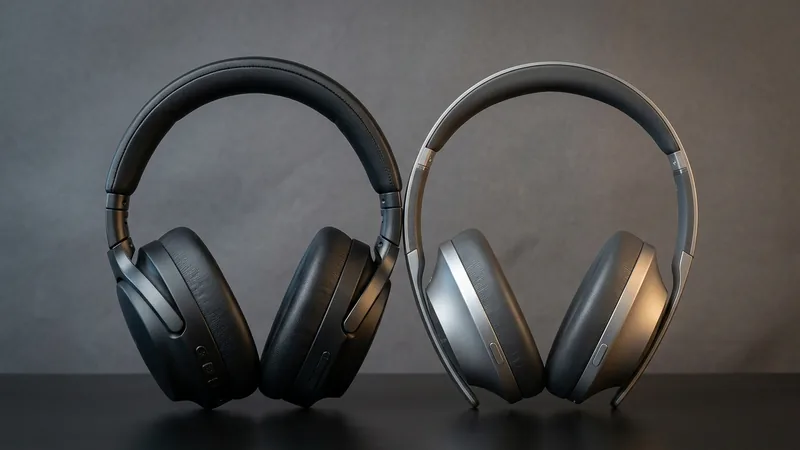
- Read time4 min
- Data tables1
- StatusResearch updated 2026-09-24
At a Glance
With the release of the Bose QuietComfort Ultra Headphones (2nd Gen) and the Sony WH-1000XM6, listeners have two premium active noise cancelling (ANC) options. While both deliver strong performance, they target different priorities. Bose focuses on physical portability and isolation, while Sony leans into software customization, mid-range clarity, and longer battery life.
Before diving into the detailed rounds, check how their core specifications compare:
| Feature | Bose QC Ultra (2nd Gen) | Sony WH-1000XM6 |
|---|---|---|
| MSRP | $449.00 | $459.99 |
| Battery Life (ANC On) | Up to 30 hours (23 hours with Immersive Audio) | Up to 30 hours (Sony rating); over 37 hours in SoundGuys testing |
| USB-C Audio | Yes (Lossless digital audio supported) | No (Charging only; analog 3.5mm for wired) |
| EQ Customization | 3-band (via Bose App) | 10-band (via Sound Connect App) |
| IP Rating | None | None |
Round 1: Noise Cancelling
Both brands built their reputations on active noise cancellation. However, independent testing reveals subtle differences in how they handle environmental noise.
Reviewer Tammy Rogers of Tom's Guide, who tested both models over a six-month period, noted that the Bose QuietComfort Ultra (2nd Gen) provides strong isolation, stating they block out nearly all external noise when music is playing. Bose has also updated its digital signal processing algorithm to improve the ActiveSense experience in Aware Mode, making transitions smoother when filtering out sudden spikes of noise like sirens or passing trains.
The Sony WH-1000XM6 is close behind. It offers a transparency mode that makes conversations with transit workers or store clerks sound natural rather than robotic. While Sony's ANC is highly effective, those prioritizing maximum isolation tend to favor the Bose system.
Round 2: Sound Quality and Customization
The two manufacturers take different approaches to audio delivery and user control. The Bose QuietComfort Ultra (2nd Gen) introduces support for lossless digital audio over a wired USB-C connection. This allows listeners to stream high-fidelity 16-bit/44.1kHz or 48kHz audio directly from compatible source devices. Bose also debuts Cinema Mode, a spatial audio setting designed to widen the soundstage and bring dialogue forward, which Bose recommends for movies, podcasts, and audiobooks.
Despite these hardware additions, Sony wins the customization round. The Sony Sound Connect app features a 10-band equalizer, compared to Bose's 3-band EQ. For listeners who like to fine-tune their sound profiles, Sony offers far more granular control. In terms of sound signature, Tom's Guide editors noted that the WH-1000XM6 trades a wider soundstage for strong mid-range clarity, making it engaging for critical music listening, whereas the Bose is often described as better suited for relaxed, background listening.
Round 3: Comfort and Design
If you plan to wear your headphones for hours on end, comfort is a deciding factor. Both models feature folding hinges and lay-flat travel cases, making them portable. However, their physical fits differ significantly.
The 2nd Gen Ultra headphones feature soft ear cushions that Bose designed for a lightweight fit, which reviewers at SoundGuys note are designed for comfort over long periods. The design has been refreshed with polished metal yokes for a more premium aesthetic, though reviewers caution that the chrome-finished armatures are prone to picking up fingerprints.
The Sony WH-1000XM6 opts for a utilitarian, minimalist design. While comfortable, SoundGuys reviewers noted that the utilitarian design includes a lip encircling the padding that might annoy some users, and the less-breathable pads on the Sony can lead to minor heat build-up.
Round 4: Battery Life and Charging
Sony rates the WH-1000XM6 for up to 30 hours with noise cancelling on. Both manufacturers therefore give a 30-hour rating. A separate reviewer's measured result is not a directly comparable manufacturer rating.
For long trips, battery endurance and charging speeds are critical. Sony takes the lead in overall battery performance, with SoundGuys testing the WH-1000XM6 at over 37 hours of playback on a single charge. In contrast, the Bose QuietComfort Ultra (2nd Gen) delivers up to 30 hours of playback with ANC turned on, which drops to 23 hours if you enable Immersive Audio (though it can stretch to 45 hours with ANC completely disabled).
Sony also holds an advantage in quick-charging efficiency, providing up to 3 hours of playback from a brief 3-minute charge. However, Bose has added a convenience feature to the 2nd Gen: the headphones can now be charged while in use via the USB-C port.
Quick Answers
Do either of these headphones have water resistance?
No. Neither the Bose QuietComfort Ultra (2nd Gen) nor the Sony WH-1000XM6 carries an official IP rating for dust or water resistance. You should avoid using them during heavy workouts or in rainy conditions.
Can I use these headphones with a wired connection?
Yes. The Sony WH-1000XM6 supports a traditional analog connection via an included cable. The Bose QuietComfort Ultra (2nd Gen) supports lossless digital audio directly over a wired USB-C connection.
Do these headphones support multipoint Bluetooth?
Yes. Both models support multipoint connectivity, allowing you to stay connected to two source devices simultaneously (such as your phone and laptop) for easier switching.
The Verdict: Which Should You Buy?
The Sony WH-1000XM6 is the better choice for listeners who prioritize software customization and battery life, while the Bose QuietComfort Ultra (2nd Gen) is ideal for those seeking maximum noise isolation and long-wear comfort.
Choose the Sony WH-1000XM6 if you want longer battery life, a customizable 10-band EQ, and clear mid-range audio. It is a strong choice for daily commuting and office use, provided you do not mind a slightly firmer fit.
Choose the Bose QuietComfort Ultra (2nd Gen) if your primary concerns are long-wear comfort, maximum noise isolation, and the ability to listen to lossless digital audio over a wired USB-C connection. It is a capable travel companion for long flights.
Compare ownership costs with your own numbers.
Sources and research notes
Research checked 2026-09-24. Source comparison; this is a research synthesis. Findings attributed to other reviewers remain their work.
- WH-1000XM6 Specifications | Sony USA
- Read Bose Press Release: QuietComfort Ultra Headphones (2nd Gen) Launch | Bose
- I tested the Sony WH-1000XM6 vs Bose QuietComfort Ultra 2 for 6 months — and there's a clear winner | Tom's Guide
- Bose QuietComfort Ultra (2nd Gen) vs Sony WH-1000XM6: Back for another title fight - SoundGuys
What the evidence does not establish
- No physical testing was performed by this publication; findings are synthesized from manufacturer specifications and independent reviews.
Keep reading
 Headphones
Sony WH-1000XM6 vs. Apple AirPods Max 2
Compare the Sony WH-1000XM6 and Apple AirPods Max 2 on comfort, sound quality, battery life, and ecosystem integration to find the right premium headphones for your setup.
 Air fryers
Ninja vs Cosori Air Fryers: Which Brand Wins?
Ninja vs Cosori air fryers compared on crisping, capacity, ease of cleaning, noise and value. A clear brand pick plus which model to buy.